
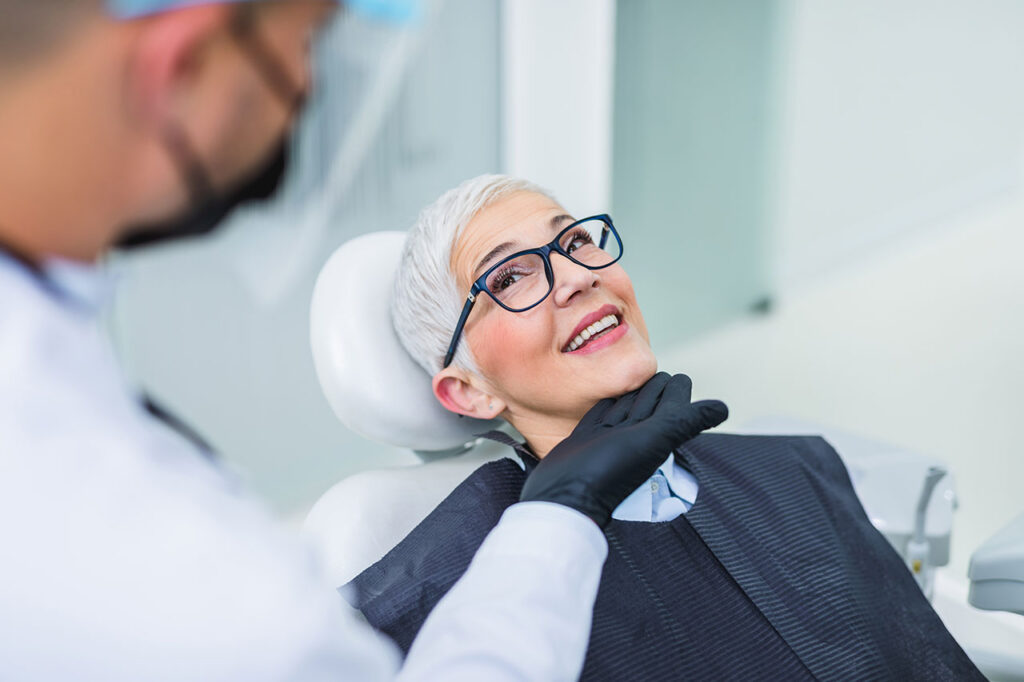
Your dental appointment is about more than clean teeth. A routine dental visit can also provide an opportunity to look for changes in your mouth that you may not notice yourself. At Aria Dental of Annapolis, oral cancer screenings are part of routine dental checkups, giving patients another important reason to stay consistent with preventive care.
An oral cancer screening is quick, non-invasive, and generally painless. It is not a diagnosis, and noticing an unusual area does not automatically mean something serious is wrong. Instead, screening helps identify changes that may deserve additional observation or evaluation. Understanding what happens during an oral cancer screening can make your regular dental visits feel even more worthwhile.
What Is an Oral Cancer Screening?
An oral cancer screening is a visual and physical examination of the tissues inside and around your mouth. Your dental team looks for unusual changes involving areas such as the lips, gums, cheeks, tongue, floor of the mouth, roof of the mouth, and other oral tissues.
The purpose is to identify suspicious changes early enough that they can be evaluated appropriately. A screening itself does not determine whether a lesion is cancerous. If an area looks unusual, additional monitoring, referral, or diagnostic testing may be recommended.
Why Are Routine Screenings Important?
Your mouth changes over time. Some changes are completely harmless, while others may deserve attention. Because your dental team examines your mouth regularly, they can sometimes notice differences that are difficult to see at home.
Regular visits also give you an opportunity to mention changes you have noticed between appointments. A sore that does not heal, an unusual lump, persistent irritation, or a patch that looks different from the surrounding tissue should not simply be ignored.
What Does the Dentist Look For?
During a screening, your dental professional may look for:
- Red or white patches
- Sores that do not heal
- Areas that bleed easily
- Lumps or thickened tissue
- Hard or rough areas
- Unusual changes involving the tongue
- Changes in the gums or cheeks
- Persistent areas of irritation
- Other abnormalities that warrant observation
These findings can have many possible causes. For example, irritation can result from biting the cheek, a sharp tooth, a dental appliance, or another non-serious issue. That is why an unusual finding should be evaluated rather than immediately assumed to represent a serious disease.
What Happens During an Oral Cancer Screening?
The screening generally takes place during your regular dental examination. Your dental professional visually examines the tissues and may gently feel certain areas to check for unusual texture, swelling, or firmness.
The process is typically brief. There are no injections, drills, or complicated preparations involved in a standard screening.
Examining the Lips
The outside and inside surfaces of the lips can be inspected for changes in color, texture, sores, or other abnormalities.
Examining the Cheeks
The inner cheeks are checked for unusual patches, thickened areas, sores, or irritation.
Examining the Tongue
The surface, sides, and underside of the tongue are important areas to evaluate. Your dental professional may ask you to move your tongue into different positions so the tissues can be viewed clearly.
Examining the Roof and Floor of the Mouth
The roof and floor of the mouth contain tissues that are not easy to examine on your own. A professional screening provides a closer look at these areas.
Examining the Gums
Your gums are already evaluated during routine dental care, but they are also part of an oral cancer screening. Changes in color, texture, swelling, or persistent sores may warrant further attention.
What If Something Unusual Is Found?
The first thing to remember is that an unusual finding is not the same thing as a diagnosis. Many oral abnormalities are caused by irritation or other conditions that are not cancer.
Depending on the situation, your dentist may recommend monitoring the area for a short period, returning for another examination, consulting another healthcare professional, or pursuing additional diagnostic testing.
A biopsy may be recommended when appropriate. A biopsy is a diagnostic procedure used to determine what a suspicious area actually represents. Your dental team can explain why additional evaluation is being recommended and what to expect.
Signs You Should Tell Your Dentist About
You do not have to wait for your next scheduled appointment if you notice a persistent change in your mouth. Contact your dental office if you experience:
- A sore that does not heal
- Persistent lumps or thickened areas
- Unexplained bleeding
- Persistent red or white patches
- Unusual numbness or tenderness
- Difficulty swallowing or chewing
- Persistent throat discomfort
- A noticeable change in oral tissues
These symptoms can have many causes, but persistent changes deserve professional evaluation.
Oral Cancer Screening Benefits
- Provides another layer of preventive care during routine dental visits.
- Allows dental professionals to observe oral tissues regularly.
- Can help identify unusual changes that may otherwise go unnoticed.
- Is quick and non-invasive.
- Does not require a separate appointment when included with a routine checkup.
- Creates an opportunity to discuss changes you have noticed at home.
- Can encourage earlier evaluation when something unusual persists.
- Complements regular cleanings, examinations, and other preventive dental services.
Who Should Receive Oral Cancer Screenings?
Oral cancer screenings can be an important part of routine dental care for adults. Your dentist can discuss your individual risk factors and determine whether additional monitoring or evaluation is appropriate.
Risk factors can vary from person to person. Tobacco use, alcohol consumption, certain viral infections, sun exposure involving the lips, age, and other factors may influence risk. However, oral abnormalities can occur in people without obvious risk factors, which is one reason routine examinations remain valuable.
How Often Should You Be Screened?
For many patients, screening can be incorporated into regular dental examinations. This creates a convenient opportunity to monitor changes over time rather than waiting until something becomes uncomfortable.
If you have a history of concerning findings or other risk factors, your dentist may recommend a different schedule or additional evaluation.
Oral Health Is About More Than Teeth
It is easy to think of a dental visit as simply a cleaning followed by a check for cavities. However, your mouth includes much more than your teeth. Your gums, tongue, cheeks, lips, and other oral tissues are all part of your overall oral health.
That broader perspective is one reason routine dental care remains important even when your teeth feel fine. Preventive visits provide opportunities to identify concerns before they become painful or disruptive.
Make Preventive Dental Care Part of Your Routine
An oral cancer screening does not replace medical evaluation when symptoms are present, and it is not a guarantee that disease will be detected. It is one useful component of comprehensive dental care.
If it has been a while since your last dental examination, scheduling an appointment gives your dental team an opportunity to evaluate your teeth, gums, and oral tissues while also discussing any changes you have noticed.
Protect Your Oral Health in Annapolis
Routine dental care is about prevention, awareness, and staying ahead of potential problems. An oral cancer screening takes only a small part of your appointment, yet it can provide valuable information about the health of your mouth.
Call Aria Dental of Annapolis at (410) 280-5370 to Schedule a Consultation in Annapolis, MD.