
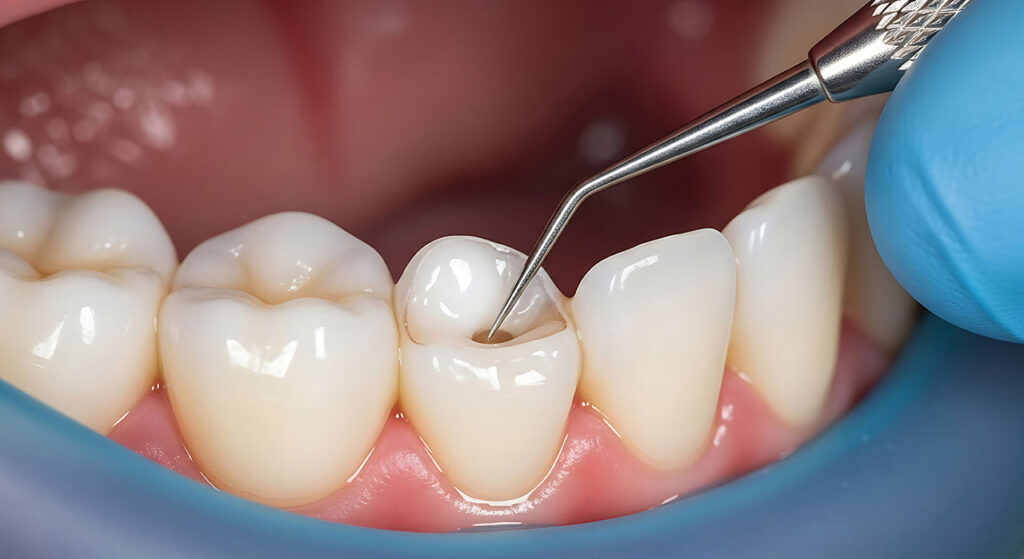
Finding out that you have a cavity does not mean you have to settle for a noticeable metal filling. Tooth-colored fillings provide a natural-looking way to repair many cavities while restoring the shape and function of the affected tooth. At Aria Dental of Annapolis, composite tooth-colored fillings are customized to blend with your natural smile.
A cavity may start small, but leaving it untreated can allow decay to move deeper into the tooth. Fortunately, many cavities can be repaired with a straightforward filling. Modern composite materials can be matched to the shade of your teeth, making the finished restoration much less noticeable than traditional metal-colored fillings.
What Are Tooth-Colored Fillings?
Tooth-colored fillings are restorations made from composite resin. The material is available in different shades, allowing your dental professional to select a color that blends with your surrounding enamel.
The filling replaces tooth structure that has been damaged by decay. Once the decayed portion is removed, the composite material is placed into the prepared area, shaped to recreate the tooth’s natural contours, and hardened with a curing light.
The result is a repaired tooth that can look natural while restoring its function.
Why Do Cavities Need to Be Treated?
A cavity is the result of tooth structure being damaged by an ongoing decay process. Plaque bacteria interact with sugars and carbohydrates, producing acids that can gradually weaken enamel.
Early decay may not cause noticeable symptoms. That is one reason routine dental examinations matter. A patient may feel perfectly comfortable while a cavity is developing.
Once decay progresses, symptoms such as sensitivity, food trapping, or tooth pain may appear. Treating the problem earlier can often mean a more conservative restoration.
How Do Tooth-Colored Fillings Work?
The process begins with an examination to determine the size and location of the cavity. Your dentist may use dental imaging when necessary to understand the extent of the decay.
Once treatment is planned, the affected area is numbed so the procedure can be performed comfortably. The decayed tooth structure is removed, leaving a clean area for the restoration.
The tooth is then prepared so the composite material can bond securely. The dentist selects an appropriate shade and applies the composite in layers.
Each layer is hardened using a curing light. After the material has been placed, the dentist shapes and polishes the filling so it fits naturally with your bite.
Why Is Composite Resin a Popular Choice?
One of the most obvious advantages is appearance. Composite can be matched to natural tooth color, allowing the restoration to blend into the smile.
However, appearance is not the only consideration. Composite resin also bonds directly with tooth structure. Depending on the size and location of the cavity, this bonding can allow for a conservative restoration that preserves more healthy tooth structure.
Your dentist will determine whether composite is appropriate based on the location, size, and condition of the tooth.
Are Tooth-Colored Fillings Strong?
Modern composite materials are durable and suitable for many cavity repairs. However, no filling material is ideal for every situation.
Very large restorations on back teeth may experience significant chewing forces. In those cases, your dentist may recommend another restoration, such as an inlay, onlay, or crown, depending on how much tooth structure remains.
The goal is to choose a restoration that appropriately balances appearance, strength, function, and preservation of healthy tooth structure.
What Does Getting a Filling Feel Like?
The area is typically numbed before the dentist begins removing decay. You may notice pressure, vibration, or sounds during the procedure, but you should not experience sharp pain.
After the filling is placed, the tooth may feel slightly different for a short time. Some patients experience temporary sensitivity to hot, cold, or pressure. If discomfort persists or your bite feels uneven, contact the dental office so the filling can be evaluated.
How Long Does a Tooth-Colored Filling Take?
Many composite fillings can be completed during a single appointment. The exact length depends on the number of teeth being treated and the size and location of the restorations.
Your dentist can provide a more specific estimate during your examination.
Can Old Metal Fillings Be Replaced?
Some patients choose to replace older metal-colored fillings with tooth-colored composite restorations. There can be cosmetic reasons for doing so, particularly when an older filling is visible when you smile or speak.
However, replacing a filling is not automatically necessary simply because it is old. Your dentist should evaluate its condition and the surrounding tooth before recommending replacement.
If an old filling is cracked, leaking, worn, or associated with decay, replacement may be appropriate. In other situations, monitoring may be reasonable.
How Can You Protect a Tooth After a Filling?
A filling repairs damage, but the surrounding tooth remains vulnerable to future decay. Good oral hygiene is therefore essential.
- Brush twice daily with fluoride toothpaste.
- Clean between your teeth every day.
- Attend regular dental examinations.
- Keep professional cleaning appointments.
- Limit frequent sugary snacks and drinks.
- Drink water throughout the day.
- Avoid chewing extremely hard objects.
- Tell your dentist if you notice sensitivity or changes in the filling.
What Can Cause a Filling to Fail?
Fillings can eventually wear down or develop problems. Heavy chewing forces, grinding, recurrent decay, poor oral hygiene, and normal aging can all affect a restoration.
Composite fillings may also pick up some staining over time, particularly when exposed frequently to coffee, tea, red wine, or tobacco. Professional cleanings can help maintain their appearance.
Regular examinations allow your dentist to monitor restorations and identify problems before they become more serious.
Tooth-Colored Fillings Benefits
- Blend closely with natural tooth color.
- Provide a discreet way to repair many cavities.
- Restore tooth shape and chewing function.
- Bond directly to tooth structure.
- Can allow for a conservative repair when clinically appropriate.
- Can often be completed in a single appointment.
- Can also be used for certain minor cosmetic repairs.
- Help restore teeth while maintaining a natural-looking smile.
- Offer a modern alternative to visibly metal-colored restorations in appropriate cases.
Tooth-Colored Fillings vs. Crowns
A filling and a crown serve different purposes. A filling repairs a portion of the tooth affected by decay. A crown covers the tooth more extensively and may be recommended when the remaining tooth structure is significantly weakened.
If a cavity is small or moderate, a filling may provide an appropriate conservative repair. If a tooth has extensive damage, a crown may provide the additional coverage and protection it needs.
Your dentist will evaluate the tooth rather than automatically choosing one restoration for every cavity.
Why Early Treatment Matters
Small cavities are generally easier to manage than large areas of decay. As decay progresses deeper into a tooth, treatment may become more involved.
In some cases, advanced decay can eventually reach the inner pulp and require root canal treatment. If the tooth becomes too damaged to restore, extraction may become necessary.
That is why a routine examination can be valuable even when your teeth feel fine. Early detection gives you more opportunities to choose a conservative treatment.
Protect Your Smile With Timely Care
A cavity does not have to leave a noticeable mark on your smile. Tooth-colored fillings can restore many damaged teeth while providing a natural-looking result that blends with surrounding enamel.
If you have a cavity, an old filling that concerns you, or sensitivity that has recently developed, an examination can help determine what is happening and which treatment options are appropriate.
Call Aria Dental of Annapolis at (410) 280-5370 to Book an Appointment in Annapolis, MD.