
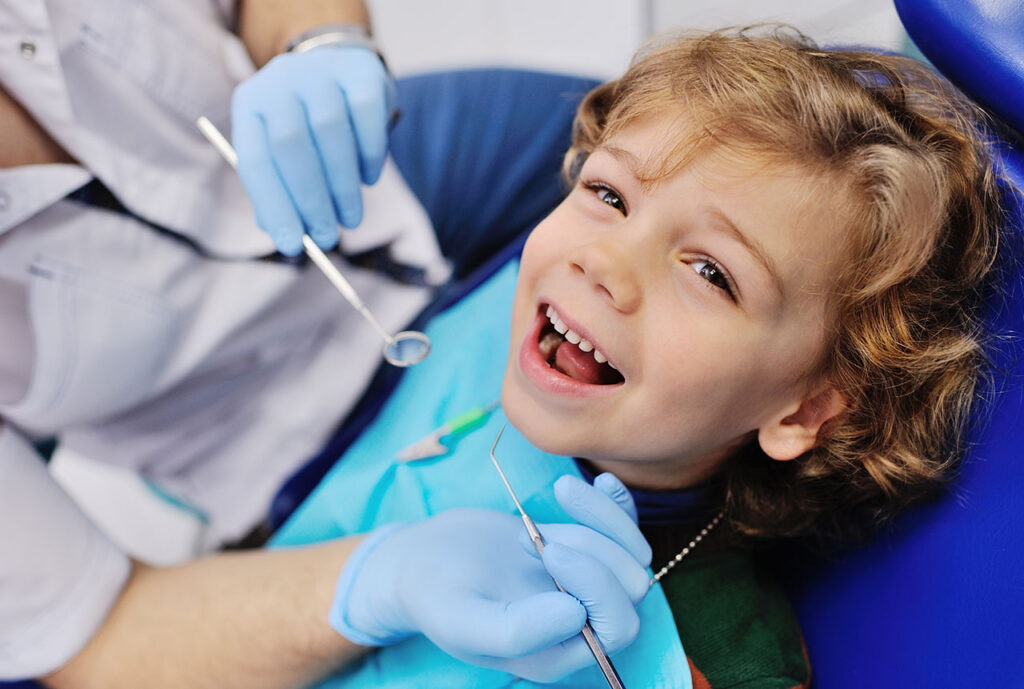
Why Early Dental Care Matters
Pediatric dentistry is focused on creating positive dental experiences while promoting long-term oral health. Children’s teeth are more susceptible to decay because enamel is thinner than adult teeth. Additionally, early habits often carry into adulthood, making early care essential. Regular dental visits help prevent cavities, monitor growth and bite development, and teach children proper oral hygiene. A positive first experience encourages children to view dental care as routine rather than stressful.
Parents play a crucial role in shaping children’s habits. Supervised brushing, consistent flossing, and healthy dietary choices support teeth and gum health. Pediatric dentists can guide parents in developing a preventive care plan that fits each child’s needs and temperament.
First Dental Visits, What to Expect
The American Academy of Pediatric Dentistry recommends a child’s first dental visit by age one or within six months of the first tooth appearing. Early visits focus on gentle examination, education, and establishing comfort.
Initial Exam and Cleaning
During the first exam, the dentist examines teeth, gums, jaw, and oral tissues. A cleaning may be performed if there is plaque or debris, though at very young ages the goal is often familiarization rather than a full polish.
Education and Demonstration
Children learn about brushing, flossing, and healthy snacks. Pediatric dentists often use models, mirrors, and fun explanations to help children understand why dental care matters. Demonstrations on a doll or model allow children to practice brushing and feel more confident.
Preventive Treatments
Fluoride varnish may be applied to strengthen enamel and reduce the risk of cavities. Sealants may be recommended for molars once they erupt to protect grooves from decay. These preventive measures are painless and help avoid more extensive treatment later.
Common Pediatric Dental Concerns
Cavities
Cavities are the most common chronic childhood condition. Children may be prone to cavities due to frequent snacking, bottle feeding with sugary liquids, or improper brushing. Preventive measures, such as fluoride and sealants, along with routine brushing and flossing, are essential.
Thumb-Sucking and Pacifiers
These habits are natural during infancy, but prolonged use can affect tooth alignment and bite development. Pediatric dentists provide guidance on gently curbing these habits at appropriate ages.
Tooth Grinding
Many children grind teeth at night, often without realizing it. While usually temporary, excessive grinding can wear enamel and cause sensitivity. Night guards may be recommended for ongoing cases.
Early Orthodontic Concerns
Monitoring bite development and spacing is important for preventing more extensive treatment later. Early evaluation can identify crowding, crossbite, or other alignment issues, allowing timely intervention.
Nutrition and Oral Health
Healthy eating supports stronger teeth and gums. Recommendations include:
- Limiting sugary snacks and drinks
- Encouraging fruits, vegetables, cheese, and dairy products
- Offering water between meals instead of juice or soda
- Avoiding prolonged bottle or sippy cup use with sugary liquids
Nutrition plays a direct role in cavity prevention, enamel development, and overall dental health. Balanced meals and snacks reduce acid exposure and support stronger teeth.
Teaching Good Habits at Home
Parents are instrumental in helping children develop consistent oral care routines. Supervised brushing ensures that fluoride toothpaste is used properly and brushing is thorough. Flossing should begin once teeth touch and continue daily. Positive reinforcement and rewards for consistency encourage long-term adherence.
Making Dental Visits Comfortable
A pediatric dentist’s approach prioritizes comfort and trust. Techniques include:
- Explaining each step in simple terms
- Allowing children to explore instruments before treatment
- Offering positive reinforcement and praise
- Providing breaks as needed to reduce stress
Creating a supportive environment helps children associate dental visits with safety and fun rather than fear.
Maintaining Oral Health Between Visits
- Brush at least twice daily with fluoride toothpaste
- Floss daily once teeth touch
- Limit sugary snacks between meals
- Encourage drinking water and chewing sugar-free gum if appropriate
- Attend regular checkups, usually every six months, or as recommended
Routine home care combined with professional visits forms the foundation for lifelong dental health.
Advantages of Pediatric Dentistry
Pediatric dentistry not only protects teeth and gums from decay, it also instills lifelong habits that support overall health. Children who learn proper brushing and flossing early are less likely to develop cavities and gum disease. Preventive treatments, such as fluoride varnish and sealants, reduce the likelihood of invasive procedures later. In addition, regular dental visits help children feel comfortable and confident, reducing anxiety and making future care easier. Early monitoring also ensures bite and jaw development are on track, which can prevent costly orthodontic treatment in the future.
How to Choose a Pediatric Dentist
Choosing a pediatric dentist involves considering experience, communication skills, and office environment. A dentist who can connect with children, explain procedures in a fun way, and maintain a calm atmosphere sets the stage for positive dental experiences. Parents should feel comfortable asking questions about preventive care, nutrition, and habit management.
Creating a Positive Dental Routine
Consistency and support at home complement professional care. Encouraging a two-minute brushing routine twice daily, daily flossing, and proper nutrition strengthens enamel and gums. Celebrating small milestones, such as a cavity-free checkup, reinforces positive behaviors. Over time, children develop a sense of responsibility for their oral health, which supports healthier smiles as they grow.
Regular visits, preventive measures, and home care together create a comprehensive approach to dental wellness. Children learn that dental visits are not something to fear, but a routine part of staying healthy.
Personalized Care for Every Child
Every child has unique needs. A dentist considers growth patterns, habits, and oral health history when developing a care plan. This personalized approach ensures treatment is effective, comfortable, and developmentally appropriate. Children feel respected and supported, which encourages cooperation and long-term commitment to oral care.
Encouraging Lifelong Healthy Smiles
By combining early preventive care, habit education, and positive experiences, pediatric dentistry helps children develop healthy teeth and gums while reducing anxiety about dental visits. Early care protects enamel, prevents decay, and sets the stage for a confident, functional, and attractive smile that can last a lifetime.
If you want to start or maintain your child’s dental journey with a caring and experienced team, Call Aria Dental of Annapolis at (410) 280-5370 to Schedule a Consultation in Annapolis, MD.